
Understand the story behind the headline.
AI-powered adverse media that filters the news and cuts the noise. Find relevant reporting on people and organisations, and review who it concerns, what is alleged and how the story has developed, with links back to the sources.

Investigation reported
Relevance starts with the right subject.
A name in an article does not tell the whole story. Assess identity and the subject's role before treating reporting as an adverse finding.
Identity context
Review the names and details that connect the reporting to the person or organisation screened.
Role in the event
Distinguish alleged conduct from a witness, victim, associate or passing mention.
Stage of the story
Keep allegations, investigations and later outcomes in their reported context.
Review the matter. Follow the reporting.
Related reporting is grouped into a story, so analysts can review the conduct, sources and legal-stage context together.
Source-backed accounts preserve material details, including a reported response, appeal or dismissal when the article provides them.
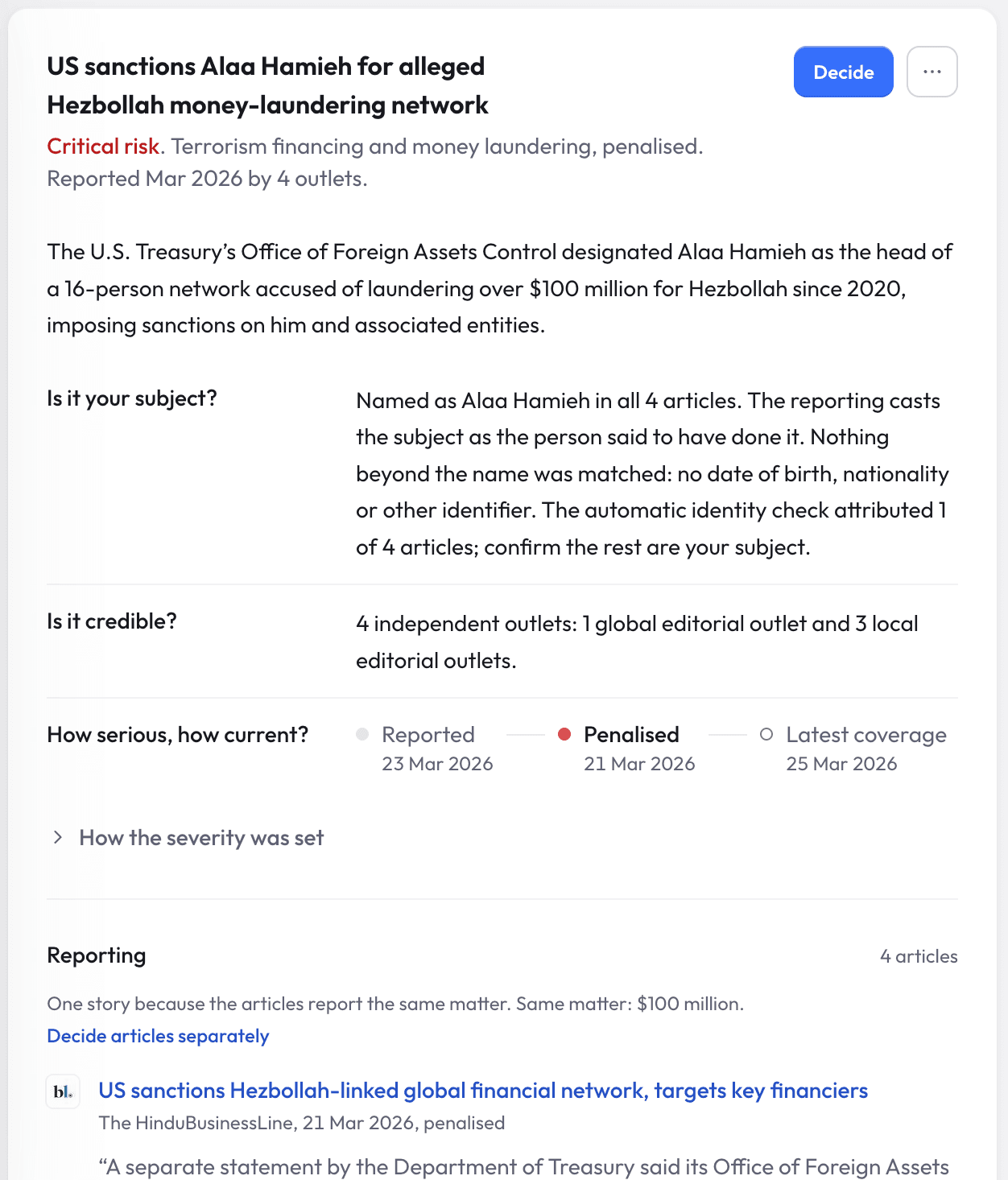
Trace a finding back to what was published.
Inspect publisher context, source links and grounded excerpts. Duplicate reporting is grouped, while source independence helps distinguish corroboration from repetition.
Publisher context
Official sources and editorial reporting are distinguished from secondary or unverified material.
Grounded excerpts
Retained evidence quotes must appear in the retrieved source text.
Coverage in context
Retrieval depends on configured providers and accessible material; we can review the scope for your needs.

Bring the reporting into your review.
Keep media findings with the screening record, link relevant evidence to a case and record an analyst's decision. Add adverse media to scheduled re-screening where configured.

Before you start.

Put the headline in context.
See how source-backed media findings can support your team's screening review.
Book a demo